与 Angular 集成
本文假设您已熟悉 Angular 的基本概念和使用模式。如需复习,请参阅 Angular 文档。
DHTMLX Pivot 可作为普通组件与 Angular 集成。完整的可运行示例请参见 GitHub 上的 Angular Pivot 演示。
创建项目
开始之前,请先安装 Angular CLI 和 Node.js。
以下命令将创建一个名为 my-angular-pivot-app 的新 Angular 项目:
ng new my-angular-pivot-app
当 Angular CLI 询问时,请禁用服务器端渲染(SSR)和静态站点生成(SSG/Prerendering)——本指南假设使用客户端渲染应用。
该命令会安装所有必要的工具,无需执行其他命令。
安装依赖
切换到新项目目录:
cd my-angular-pivot-app
使用 yarn 包管理器安装依赖并启动开发服务器:
yarn
yarn start # 或者:yarn dev
应用将在本地端口运行(例如 http://localhost:3000)。
创建 Pivot
将 Pivot 包添加到项目中,然后将 Pivot 封装为 Angular 组件。
第一步:安装包
下载 试用版 Pivot 包 并按照 README 中的步骤操作。试用版 Pivot 包有效期为 30 天。
第二步:创建组件
创建一个用于挂载 Pivot 的 Angular 组件。在 src/app/ 下新建 pivot 文件夹,并创建 src/app/pivot/pivot.component.ts。然后按以下步骤操作:
导入源文件
打开 src/app/pivot/pivot.component.ts 并导入 Pivot 包。导入路径取决于所使用的版本:
- PRO 版本(从本地文件夹安装):
import { Pivot } from 'dhx-pivot-package';
- 试用版本:
import { Pivot } from '@dhx/trial-pivot';
本教程使用 Pivot 的试用版本。
设置容器并挂载 Pivot
要在页面上显示 Pivot,需在组件模板中定义一个容器元素,然后在 ngOnInit 钩子中使用构造函数初始化 Pivot,并在 ngOnDestroy 钩子中销毁 Pivot。
以下代码片段定义了一个最小化的 Pivot Angular 组件:
import { Pivot } from '@dhx/trial-pivot';
import { Component, ElementRef, OnInit, ViewChild, OnDestroy, ViewEncapsulation } from '@angular/core';

@Component({
    encapsulation: ViewEncapsulation.None,
    selector: "pivot", // 模板名称,在 "app.component.ts" 文件中以 <pivot /> 形式使用
    styleUrls: ["./pivot.component.css"], // 引入 CSS 文件
    template: `<div #container className="widget"></div>`,
})

export class PivotComponent implements OnInit, OnDestroy {
    // Pivot 的容器引用
    @ViewChild('container', { static: true }) pivot_container!: ElementRef;

    private _table!: Pivot;

    ngOnInit() {
        // 初始化 Pivot 组件
        this._table = new Pivot(this.pivot_container.nativeElement, {});
    }

    ngOnDestroy(): void {
        this._table.destructor(); // 卸载时销毁 Pivot
    }
}
添加样式
要正确渲染 Pivot,请创建 src/app/pivot/pivot.component.css,为页面和 Pivot 容器添加样式:
/* 导入 Pivot 样式 */
@import "@dhx/trial-pivot/dist/pivot.css";

/* 初始页面样式 */
html,
body {
    margin: 0;
    padding: 0;
    height: 100%;
}

/* Pivot 容器样式 */
.widget {
    width: 100%;
    height: 100%;
}
加载数据
要向 Pivot 提供数据,请准备数据集。创建 src/app/pivot/data.ts 并导出数据和字段元数据:
export function getData() {
    const dataset = [
        {
            "cogs": 51,
            "date": "10/1/2018",
            "inventory_margin": 503,
            "margin": 71,
            "market_size": "Major Market",
            "market": "Central",
            "marketing": 46,
            "product_line": "Leaves",
            "product_type": "Herbal Tea",
            "product": "Lemon",
            "profit": -5,
            "sales": 122,
            "state": "Colorado",
            "expenses": 76,
            "type": "Decaf"
        },
        {
            "cogs": 52,
            "date": "10/1/2018",
            "inventory_margin": 405,
            "margin": 71,
            "market_size": "Major Market",
            "market": "Central",
            "marketing": 17,
            "product_line": "Leaves",
            "product_type": "Herbal Tea",
            "product": "Mint",
            "profit": 26,
            "sales": 123,
            "state": "Colorado",
            "expenses": 45,
            "type": "Decaf"
        }, // 其他数据项
    ];

    const fields: any = [
        {
            "id": "cogs",
            "label": "Cogs",
            "type": "number"
        },
        {
            "id": "date",
            "label": "Date",
            "type": "date"
        }, // 其他字段
    ];

    return { dataset, fields };
};
打开 src/app/pivot/pivot.component.ts,导入 getData,并在 ngOnInit() 中应用数据集:
import { Pivot } from '@dhx/trial-pivot';
import { getData } from "./data"; // 导入数据
import { Component, ElementRef, OnInit, ViewChild, OnDestroy, ViewEncapsulation } from '@angular/core';

@Component({
    encapsulation: ViewEncapsulation.None,
    selector: "pivot",
    styleUrls: ["./pivot.component.css"],
    template: `<div #container className="widget"></div>`,
})

export class PivotComponent implements OnInit, OnDestroy {
    @ViewChild('container', { static: true }) pivot_container!: ElementRef;

    private _table!: Pivot;

    ngOnInit() {
        const { dataset, fields } = getData(); // 解包数据和字段元数据
        this._table = new Pivot(this.pivot_container.nativeElement, {
            fields,
            data: dataset,
            config: {
                rows: ["state", "product_type"],
                columns: ["product_line", "type"],
                values: [
                    {
                        field: "profit",
                        method: "sum"
                    }, // 其他值
                ]
            },
            // 其他配置属性
        });
    }

    ngOnDestroy(): void {
        this._table.destructor();
    }
}
组件现已可以使用。挂载时,Pivot 将使用提供的数据进行渲染。完整的配置属性列表请参见 Pivot API 文档。
处理事件
用户在 Pivot 中的操作会触发相应事件,您可以对这些事件进行订阅。完整的事件列表请参见 事件概览。
以下代码片段在 ngOnInit 中扩展了一个 open-filter 事件监听器,当用户打开过滤器时记录字段 ID:
// ...
ngOnInit() {
    const { dataset, fields } = getData();
    this._table = new Pivot(this.pivot_container.nativeElement, {
        fields,
        data: dataset,
        config: {
            rows: ["state", "product_type"],
            columns: ["product_line", "type"],
            values: [
                {
                    field: "profit",
                    method: "sum"
                }, // 其他值
            ]
        }
    });

    this._table.api.on("open-filter", (ev) => {
        console.log("The field id for which the filter is activated:", ev.id);
    });
}

ngOnDestroy(): void {
    this._table.destructor();
}
第三步:将 Pivot 添加到应用
要将 PivotComponent 嵌入应用,请打开 src/app/app.component.ts 并将默认代码替换为以下内容:
import { Component } from "@angular/core";

@Component({
    selector: "app-root",
    template: `<pivot/>` // 在 "pivot.component.ts" 文件中创建的模板
})
export class AppComponent {
    name = "";
}
然后创建 src/app/app.module.ts 并注册 PivotComponent:
import { NgModule } from "@angular/core";
import { BrowserModule } from "@angular/platform-browser";

import { AppComponent } from "./app.component";
import { PivotComponent } from "./pivot/pivot.component";

@NgModule({
    declarations: [AppComponent, PivotComponent],
    imports: [BrowserModule],
    bootstrap: [AppComponent]
})
export class AppModule {}
最后,打开 src/main.ts 并将其内容替换为以下引导代码:
import { platformBrowserDynamic } from "@angular/platform-browser-dynamic";
import { AppModule } from "./app/app.module";
platformBrowserDynamic()
    .bootstrapModule(AppModule)
    .catch((err) => console.error(err));
启动应用,查看 Pivot 在页面上渲染数据的效果。
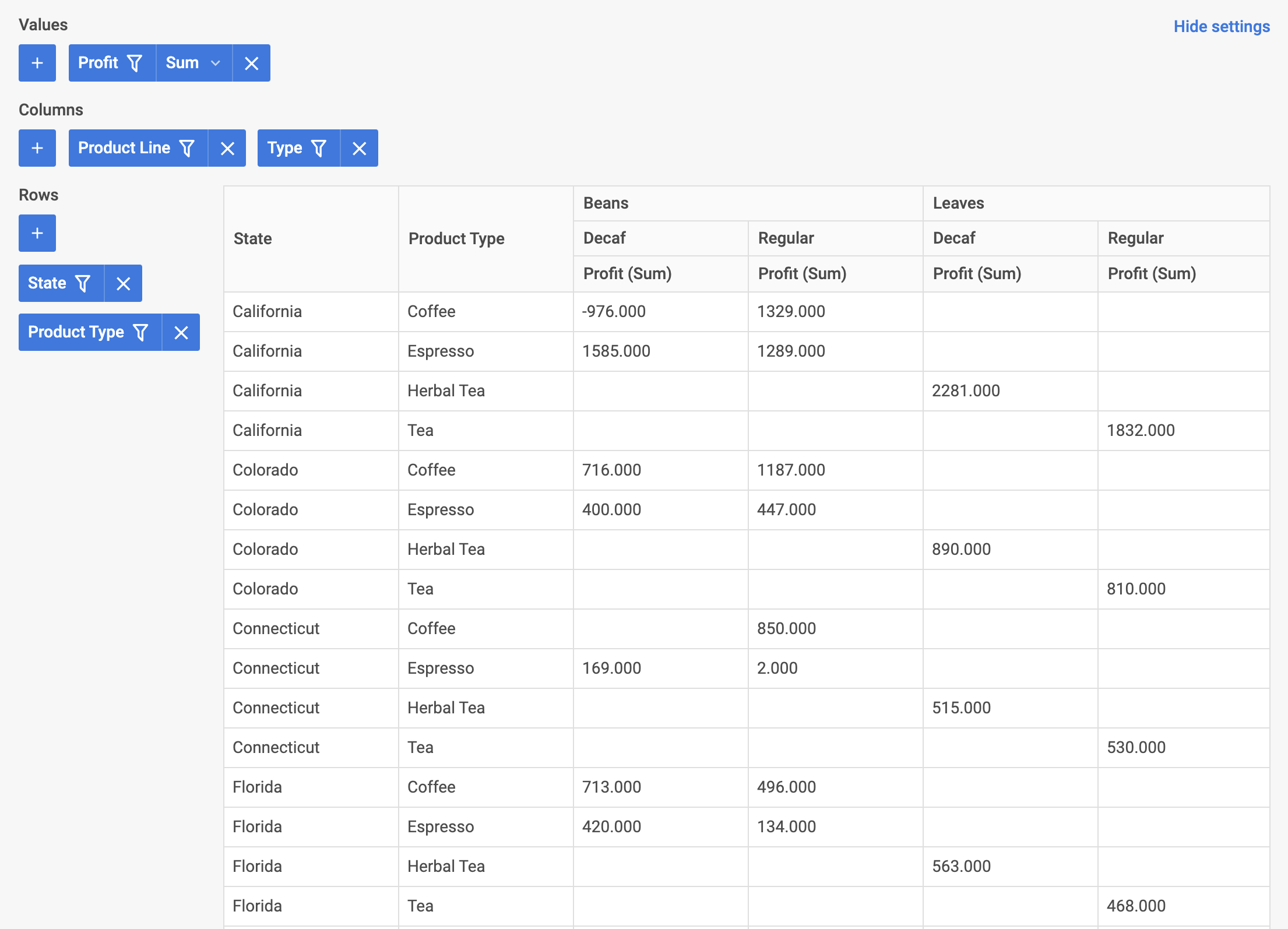
Pivot 现已与 Angular 集成完毕。您可以根据项目需求自定义配置。完整示例请参见 GitHub 上的 angular-pivot-demo。